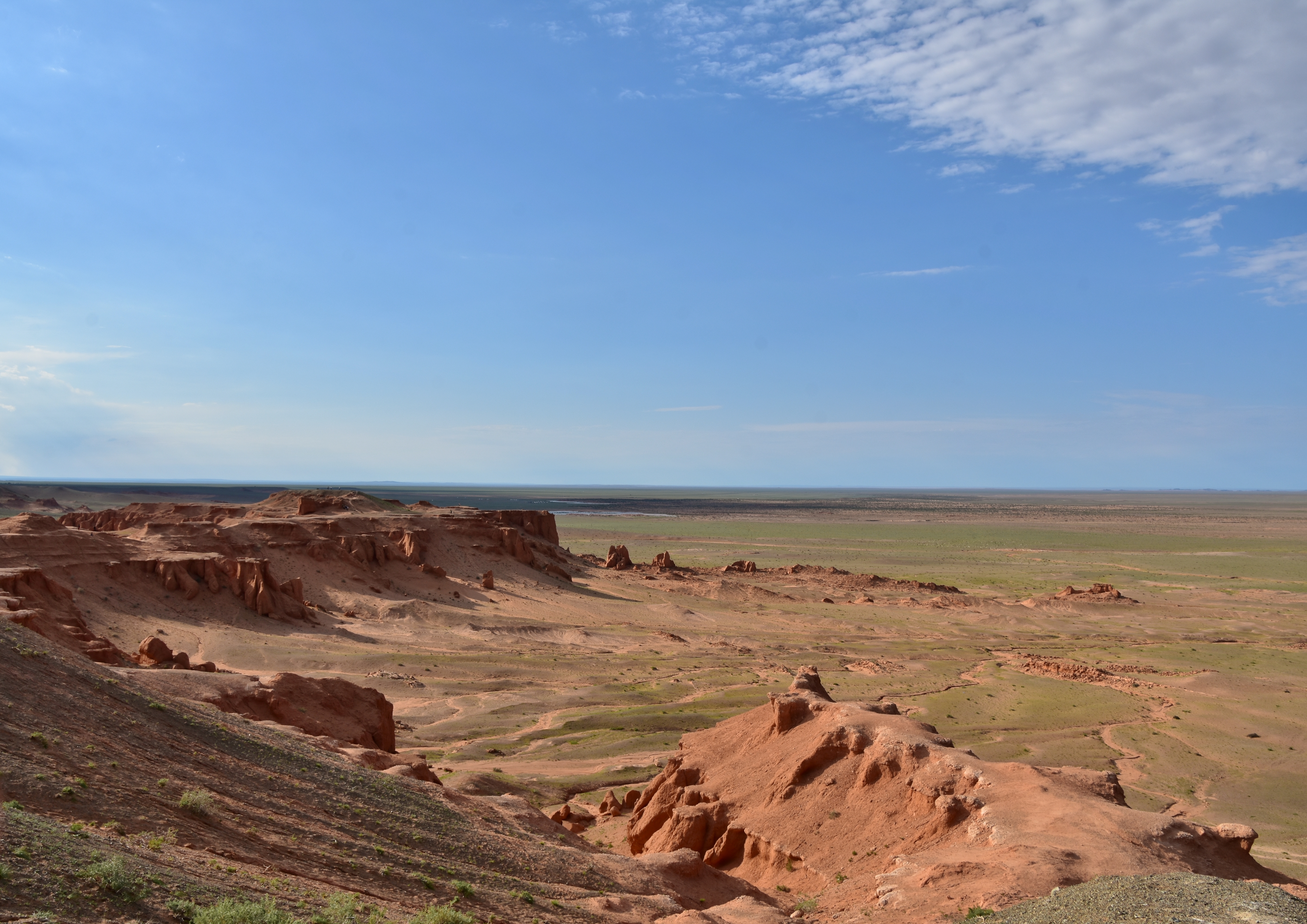
Every rainy season strips a little more sand off the Flaming Cliffs and exposes something that has been buried since the Cretaceous. Bat-Erdene Dorj has spent ten field seasons here, and he can still find something new most mornings: a curve of eggshell catching the light differently than the rock around it, a fragment of bone with the wrong texture for stone. That eye is what you're here to borrow.
You'll walk survey lines across the same red badlands where Roy Chapman Andrews's 1923 expedition found the first dinosaur eggs ever confirmed, learning to read texture and weathering the way Bat-Erdene does, logging GPS coordinates and photographs on anything promising before it's ever touched. All fieldwork runs under official permit alongside Mongolian Academy of Sciences protocols, nothing leaves the site without authorization. It's slow, exposed, sun-and-wind work. It's also as close as most people will ever get to the actual discipline of paleontology, not a museum case, but the desert floor it came out of.