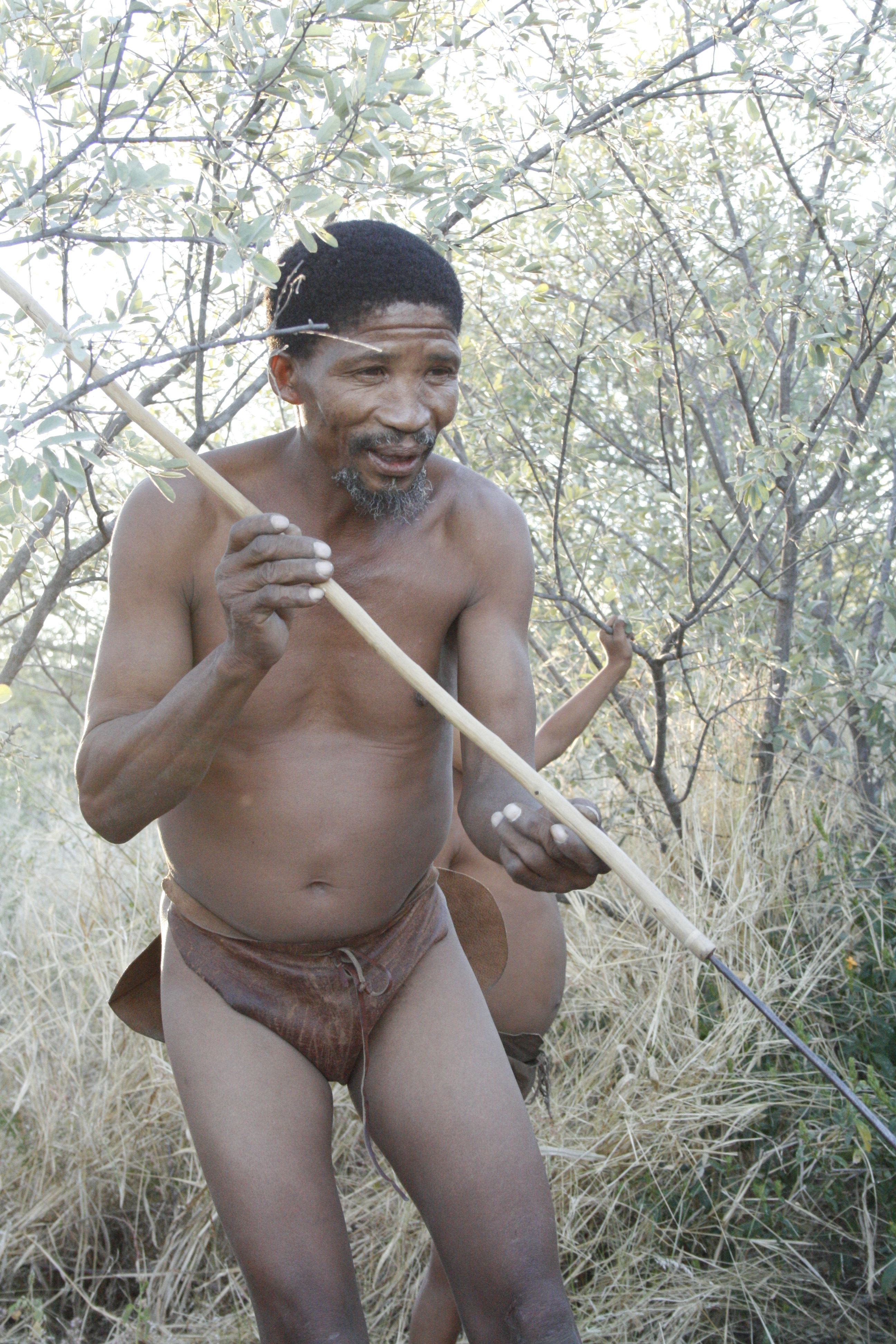
A track in dry Kalahari sand tells a Ju/'hoansi tracker almost everything: what animal, how long ago, how fast it was moving, whether it was alarmed. This is not folklore, it's a rigorous, testable skill, formal enough that international conservation programs now certify trackers through the CyberTracker system, and Gao Xontae is one of the people doing the certifying.
For eight days you'll walk with him and his fellow trackers across the Nyae Nyae Conservancy's communal land, not as a spectator on a game drive but as someone learning to actually see what they see: the difference between a walking and a running gait, how wind and heat age a print, how to guess an animal's next move from the shape of the ground ahead. It's slow, precise, physically real work, done on foot in Kalahari heat, and it puts you inside a knowledge system that very few outsiders ever get access to on its own terms.