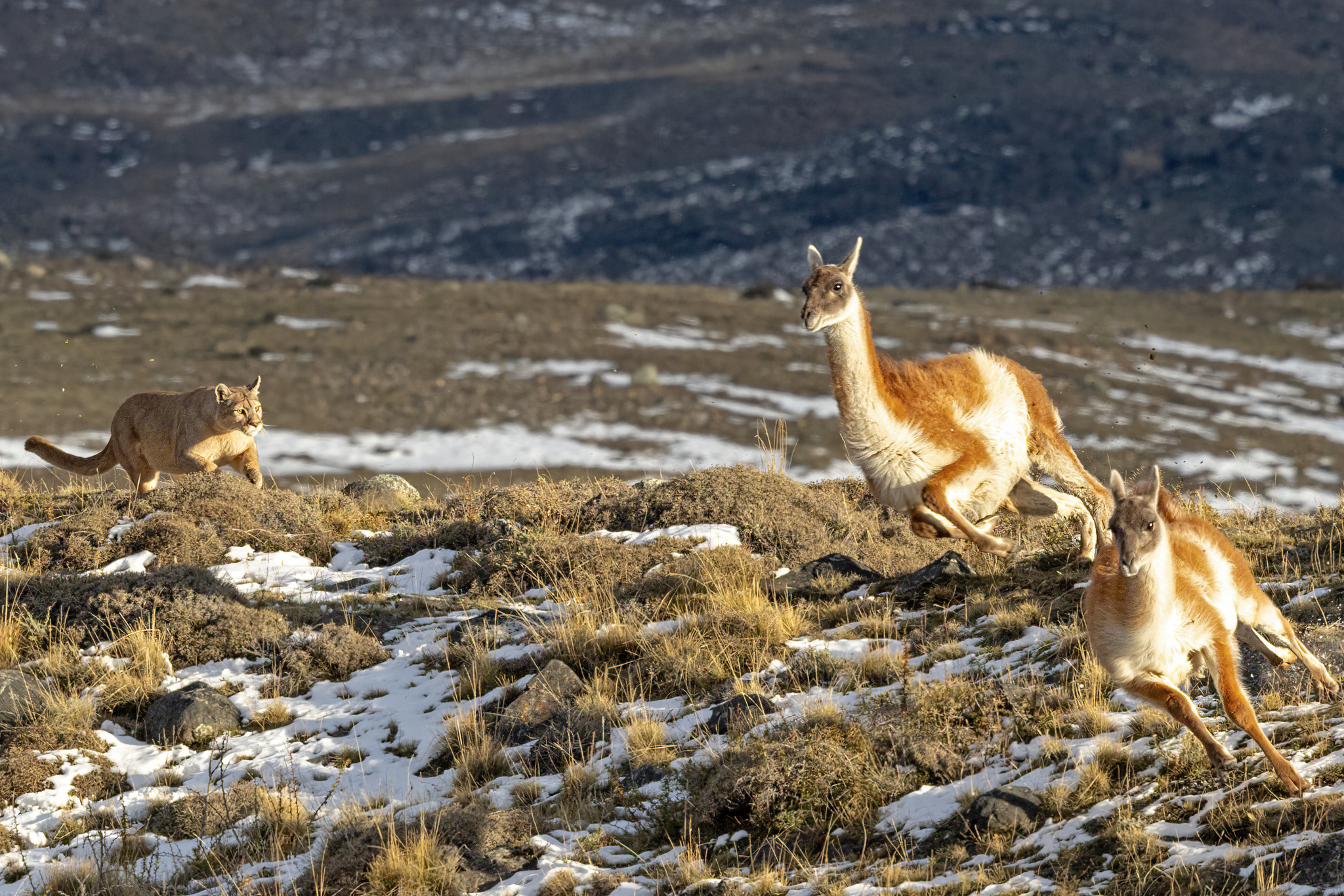
Torres del Paine has more wild pumas per square kilometer than almost anywhere on the planet, and the local trackers who watch them daily know most of the resident females by sight, their territories, their cubs, their habits. For a week you plug into that network, radios crackling at dawn with another team's sighting, guanacos suddenly going still on a ridge line that tells you a cat is near before anyone spots it.
This isn't a static hide with a guaranteed photo op. You'll hike into position before first light, glass steppe and scrubland for hours with Rodrigo Silva and the local tracking team, and adjust position through the day as reports come in. Spring calving season means real hunting pressure and real puma activity, which also means real patience: some vigils turn up nothing but wind and guanaco alarm calls. When it does come together, watching a wild puma work a herd in open Patagonian light is unlike anything a zoo enclosure or a nature documentary can give you.